- Thank you received: 0

What's the best way to proceed
- Chris001
-
 Topic Author
- New Member
-

Less
More
10 Feb 2018 19:11 #15696
by Chris001
Replied by Chris001 on topic What's the best way to proceed
The pleasure of getting it wrong… so many times 
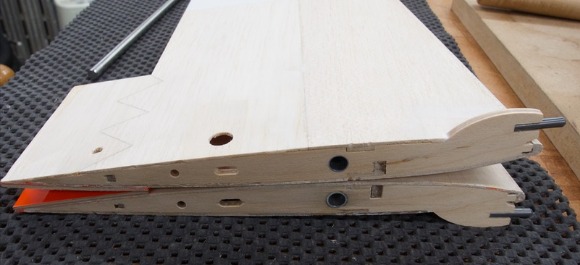
My wing joiner was bent, and so I ordered a 7mm silver steel rod to replace it, on arrival I cut it to length, bevelled the ends and polished it with some polishing paste I had lying around. It looked perfect so I popped it into the wing, and discovered it was a little restrictive, not deterred I kept going, twisting it back and forth while shoving it in. At some point the resistance got beyond a joke and I quickly retreated, after a little bit of wrangling and some very sore fingers I got it out.
My beautifully polished rod was now scored, so I went back and polished it up again, a trial fit of the bent rod into the tube was fine, so I figured I must have caught a little bit of swarf on my last attempt so I proceeded without caution, it felt a little smoother and then all of a sudden it locked up. I could maybe budge it 5º this way and that but no more, I wiggled it back and forth whilst the rod was clamping in a vice, it was slow progress and after fifteen minutes I decided to put a tape marker against the edge so I could see how much progress I was actually making extracting the rod, five minutes later the tape had not budged even a fraction of a mm.
I considered my options, but it basically came down to one, twist the wing beyond the 5º of play and see what happens, I figured I would either break the wing, the rod would come free, or I would extract the rod with the glued in aluminium tube. There was a reassuringly frightening crack and out came the rod with the tube.
To free the rod from the tube I drilled a 7mm hole in a piece of MDF, which took the rod but stopped at the 8mm diameter tube, with a slimmer bit of steel rod down the tube I hammered it out, progress was good and both rod and tube punched their way through the MDF without parting company! I repeated the process with a hole in a lump of beach and thankfully that did the trick.
Googling to find 8mm aluminium tubing with a 0.5 wall thickness was not encouraging, so I thought I’d have to try and fix the original tubing, this involved lots of attempts to polish the inside, by putting the steel rod in a drill, liberally dousing the inside of the tube with polishing paste, and with the drill running I slid on the tube, in hindsight this might have ended in injury, but luckily not on this occasion. You could not ask for a better fit, it was really smooth. So I cleaned it all up did a trial fit and managed to lock the two together again, this happened several times, what was in Einstein said about repeating the same thing and expecting a different outcome?
Fortunately I alighted upon some 8mm tube with a 0.45mm wall thickness, and eagerly anticipated the delivery. The rod fitted the tube perfectly, all that was left was to cut it to length pop it back into the wing and I would be well on my way to repairing the wing.
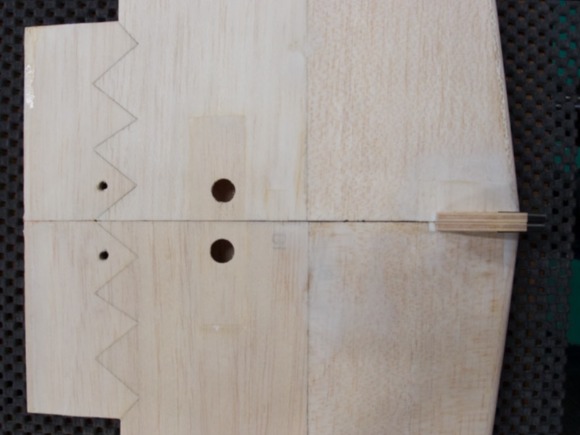
It was when dry fitting the new tube that I discovered I’m a slow learner. It appears the new tube was reluctant to slide in where the old tube had been, and I was again stuck with a bit of metal well and truly jammed and sticking out of the wing! Eventually I managed to extract it and decided to see if I could free up the holes through the ribs by putting the spare bit of tube, with sharpened end, in a hand drill and whilst spinning the tube I was able to feel my way through, success! In with the pre-cut length and it jammed again, my sense of humour for this project was bordering on failing at this point. After some barbaric practices I was able to extract the tube and I decided to cut my losses. I went back to the off-cut which was over length and putting it back in the drill. I spun the tube into place with copious amounts of CA, and then cut it flush… Done!
The balsa wood repairs went okay, so it's just a little tidying up to do and I think I'm ready to recover the wing.
Any thoughts on using 4mm carbon tube for the pins that secure the leading edge into the fuselage?
My wing joiner was bent, and so I ordered a 7mm silver steel rod to replace it, on arrival I cut it to length, bevelled the ends and polished it with some polishing paste I had lying around. It looked perfect so I popped it into the wing, and discovered it was a little restrictive, not deterred I kept going, twisting it back and forth while shoving it in. At some point the resistance got beyond a joke and I quickly retreated, after a little bit of wrangling and some very sore fingers I got it out.
My beautifully polished rod was now scored, so I went back and polished it up again, a trial fit of the bent rod into the tube was fine, so I figured I must have caught a little bit of swarf on my last attempt so I proceeded without caution, it felt a little smoother and then all of a sudden it locked up. I could maybe budge it 5º this way and that but no more, I wiggled it back and forth whilst the rod was clamping in a vice, it was slow progress and after fifteen minutes I decided to put a tape marker against the edge so I could see how much progress I was actually making extracting the rod, five minutes later the tape had not budged even a fraction of a mm.
I considered my options, but it basically came down to one, twist the wing beyond the 5º of play and see what happens, I figured I would either break the wing, the rod would come free, or I would extract the rod with the glued in aluminium tube. There was a reassuringly frightening crack and out came the rod with the tube.
To free the rod from the tube I drilled a 7mm hole in a piece of MDF, which took the rod but stopped at the 8mm diameter tube, with a slimmer bit of steel rod down the tube I hammered it out, progress was good and both rod and tube punched their way through the MDF without parting company! I repeated the process with a hole in a lump of beach and thankfully that did the trick.
Googling to find 8mm aluminium tubing with a 0.5 wall thickness was not encouraging, so I thought I’d have to try and fix the original tubing, this involved lots of attempts to polish the inside, by putting the steel rod in a drill, liberally dousing the inside of the tube with polishing paste, and with the drill running I slid on the tube, in hindsight this might have ended in injury, but luckily not on this occasion. You could not ask for a better fit, it was really smooth. So I cleaned it all up did a trial fit and managed to lock the two together again, this happened several times, what was in Einstein said about repeating the same thing and expecting a different outcome?
Fortunately I alighted upon some 8mm tube with a 0.45mm wall thickness, and eagerly anticipated the delivery. The rod fitted the tube perfectly, all that was left was to cut it to length pop it back into the wing and I would be well on my way to repairing the wing.
It was when dry fitting the new tube that I discovered I’m a slow learner. It appears the new tube was reluctant to slide in where the old tube had been, and I was again stuck with a bit of metal well and truly jammed and sticking out of the wing! Eventually I managed to extract it and decided to see if I could free up the holes through the ribs by putting the spare bit of tube, with sharpened end, in a hand drill and whilst spinning the tube I was able to feel my way through, success! In with the pre-cut length and it jammed again, my sense of humour for this project was bordering on failing at this point. After some barbaric practices I was able to extract the tube and I decided to cut my losses. I went back to the off-cut which was over length and putting it back in the drill. I spun the tube into place with copious amounts of CA, and then cut it flush… Done!
The balsa wood repairs went okay, so it's just a little tidying up to do and I think I'm ready to recover the wing.
Any thoughts on using 4mm carbon tube for the pins that secure the leading edge into the fuselage?
Please Log in or Create an account to join the conversation.
- kevinross
-

- Offline
- Platinum Member
-

Less
More
- Posts: 1023
- Thank you received: 583
10 Feb 2018 22:58 - 10 Feb 2018 22:59 #15698
by kevinross
Replied by kevinross on topic What's the best way to proceed
Chris
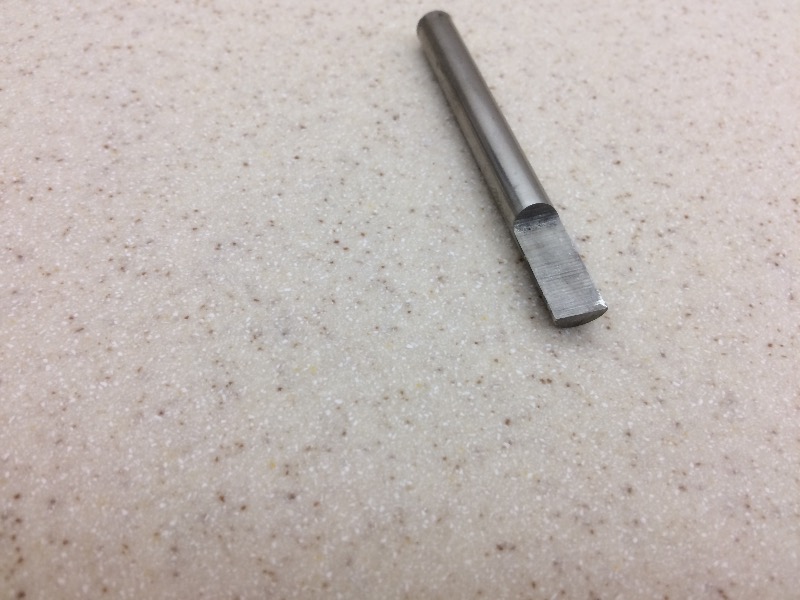
To clear an interference in the wing tube you could produce a "D-Bit" on the end of your silver steel to ream out any imperfections using a battery drill on slow speed.
Cut away the material with a hacksaw then grind away to just past the centre . If you have access to a water or oil bath grinder you will produce perfect sharp cutter and a very usable reamer.
remove on a regular basis and clean out the swarfe. Adding a little grease will help.
To clear an interference in the wing tube you could produce a "D-Bit" on the end of your silver steel to ream out any imperfections using a battery drill on slow speed.
Cut away the material with a hacksaw then grind away to just past the centre . If you have access to a water or oil bath grinder you will produce perfect sharp cutter and a very usable reamer.
remove on a regular basis and clean out the swarfe. Adding a little grease will help.
Last edit: 10 Feb 2018 22:59 by kevinross.
Please Log in or Create an account to join the conversation.
- MikeSeale
-
- New Member
-
Less
More
- Thank you received: 0
11 Feb 2018 08:08 #15699
by MikeSeale
Replied by MikeSeale on topic What's the best way to proceed
You are having way too much fun, Chris
Please Log in or Create an account to join the conversation.
- kevinross
-
- Offline
- Platinum Member
-
Less
More
- Posts: 1023
- Thank you received: 583
11 Feb 2018 08:09 #15700
by kevinross
Replied by kevinross on topic What's the best way to proceed
Regarding the securing pins - Ive used 6mm carbon pins on my much heavier Supersport for >10yrs now, so 4mm on this light model will be fine.
Furter to your Silver steel wing joiner - Bear in mind that although this material is much stronger that mild steel its "spring" characteristics are limited compared with music/ piano wire. An alternative would be carbon tube which you could safety by inserting a piece of piano wire in the centre.
Furter to your Silver steel wing joiner - Bear in mind that although this material is much stronger that mild steel its "spring" characteristics are limited compared with music/ piano wire. An alternative would be carbon tube which you could safety by inserting a piece of piano wire in the centre.
Please Log in or Create an account to join the conversation.
- JonTappin
-

- Offline
- Platinum Member
-
Less
More
- Posts: 1178
- Thank you received: 265
11 Feb 2018 08:59 #15701
by JonTappin
Replied by JonTappin on topic What's the best way to proceed
Chris sorry to hear of your problems, but I now have one of my own.
Having read your last post I have lost the will to live.
Having read your last post I have lost the will to live.
Please Log in or Create an account to join the conversation.
- Brian
-
- New Member
-
Less
More
- Thank you received: 0
11 Feb 2018 09:34 #15702
by Brian
Replied by Brian on topic What's the best way to proceed
That's encouraging Jon. I sat in a darkened room when I read about the wing joiner problem. Nice to know I'm not alone. I think the "seizing" is caused by the lapping paste. Perhaps swabbing out the bore of the tube with some dry tissue on a dowel would help.
Please Log in or Create an account to join the conversation.
- Chris001
-
Topic Author
- New Member
-
Less
More
- Thank you received: 0
11 Feb 2018 09:34 #15703
by Chris001
Replied by Chris001 on topic What's the best way to proceed
Thanks for the tips Kevin, I was in part making do with what I had to hand, but also not making the best of decisions! And I'd never have thought about making a "D-bit"
I went with the silver steel, as I was just tying to replace like with like, but will experiment with CF tube at some point.
Mike, I am having too much fun, all of my own making too
Jon, my condolences on your current predicament, I think it says a lot about your kind hearted nature that you take such an interest and empathise so deeply when you hear about others misfortune. :evil:
I went with the silver steel, as I was just tying to replace like with like, but will experiment with CF tube at some point.
Mike, I am having too much fun, all of my own making too
Jon, my condolences on your current predicament, I think it says a lot about your kind hearted nature that you take such an interest and empathise so deeply when you hear about others misfortune. :evil:
Please Log in or Create an account to join the conversation.
- JRI
-

- Offline
- Platinum Member
-
Less
More
- Posts: 502
- Thank you received: 108
11 Feb 2018 09:35 - 11 Feb 2018 09:36 #15704
by JRI
Replied by JRI on topic What's the best way to proceed
Re: the use of 4mm carbon fibre pins ... i would recommend roll-wrapped tube as it is stronger in all planes compare to poltruded profiles.
Roll Wrapping: involves the applying of resin pre-impregnated composite fibre cloth (Pre-Preg) around a mandrel. The outer diameter of the mandrel thus determines the inner diameter of the final tube. The mandrel and cloth are then spiral wrapped with a consolidation tape under tension to hold the laminate in place during the curing phase. After curing, the mandrel is extracted to leave the tube ready for machining or finishing as necessary.
Pultrusion : is a process in which dry, continuous fibres are pulled through a bath of resin and then through a die. The die serves two purposes: it forces the bundle of wet fibres to conform to the shape you want to create and, since the die is heated, it will cure the resin to set the bundle of fibres into its final shape. After the composite comes out of the die, it is allowed to post-cure while being pulled to the saw where it will be cut to stock lengths.
Quick someone fetch the de-fibrallator, I think Jon is slipping away !!!
Roll Wrapping: involves the applying of resin pre-impregnated composite fibre cloth (Pre-Preg) around a mandrel. The outer diameter of the mandrel thus determines the inner diameter of the final tube. The mandrel and cloth are then spiral wrapped with a consolidation tape under tension to hold the laminate in place during the curing phase. After curing, the mandrel is extracted to leave the tube ready for machining or finishing as necessary.
Pultrusion : is a process in which dry, continuous fibres are pulled through a bath of resin and then through a die. The die serves two purposes: it forces the bundle of wet fibres to conform to the shape you want to create and, since the die is heated, it will cure the resin to set the bundle of fibres into its final shape. After the composite comes out of the die, it is allowed to post-cure while being pulled to the saw where it will be cut to stock lengths.
Quick someone fetch the de-fibrallator, I think Jon is slipping away !!!
Last edit: 11 Feb 2018 09:36 by JRI.
Please Log in or Create an account to join the conversation.
- Chris001
-
Topic Author
- New Member
-
Less
More
- Thank you received: 0
11 Feb 2018 09:43 #15707
by Chris001
I swabbed it out with meths soaked tissue, I'm not entirely sure what was causing me so many issues with this tubing, maybe it was fractionally distorted after the crash.
Thanks John, I was vaguely aware of the different types of CF layups (if thats the right phrase), the stuff I have is obviously pultruded. I was only thinking of using the carbon tube because I can't find where I put the off cut of the 4mm beech dowel that came with the kit.
Replied by Chris001 on topic What's the best way to proceed
Brian wrote: Perhaps swabbing out the bore of the tube with some dry tissue on a dowel would help.
I swabbed it out with meths soaked tissue, I'm not entirely sure what was causing me so many issues with this tubing, maybe it was fractionally distorted after the crash.
Thanks John, I was vaguely aware of the different types of CF layups (if thats the right phrase), the stuff I have is obviously pultruded. I was only thinking of using the carbon tube because I can't find where I put the off cut of the 4mm beech dowel that came with the kit.
Please Log in or Create an account to join the conversation.
- Brian
-
- New Member
-
Less
More
- Thank you received: 0
11 Feb 2018 10:40 - 11 Feb 2018 10:41 #15711
by Brian
Replied by Brian on topic What's the best way to proceed
I should have read all your mail Chris, didn't realise you'd swabbed out the bore. Pultruded tube is Ok as long as you don't stress it by forcing a wire or dowel into it. Due to the longitudinal fibres, the tube will split.if subjected to side forces, such as applied when a wing tip touches the ground during a less than perfect landing. Roll wrapped tube, as John suggests is the way to go.
Last edit: 11 Feb 2018 10:41 by Brian.
Please Log in or Create an account to join the conversation.
Moderators: DaveBright
Time to create page: 0.410 seconds
©
2009 - 2026
WMAC PCF Design