- Thank you received: 0

Back to Basics
- Brian
-
 Topic Author
- New Member
-

Less
More
24 Apr 2020 08:03 #22253
by Brian
Replied by Brian on topic Back to Basics
Soon I'll have to make a decision, whether to fit ailerons to the Kadet, and what type of aileron? a couple of slices of balsa sheet hung on the trailing edge of the wing is the way that the SIG designer has gone. But that is a retro fit, designed to make it easy for the would be R/C novice flyer. The latest version, the Kadet Senior, has inset ailerons. A bit more work, but easy enough to build, just a few more balsa spars and some saw cuts through a few ribs. It started me wondering whether a full span strip aileron is more effective than a "barn door", or are they used because they're easier to build?
Please Log in or Create an account to join the conversation.
- Brian
-
Topic Author
- New Member
-
Less
More
- Thank you received: 0
25 Apr 2020 07:17 #22257
by Brian
Replied by Brian on topic Back to Basics
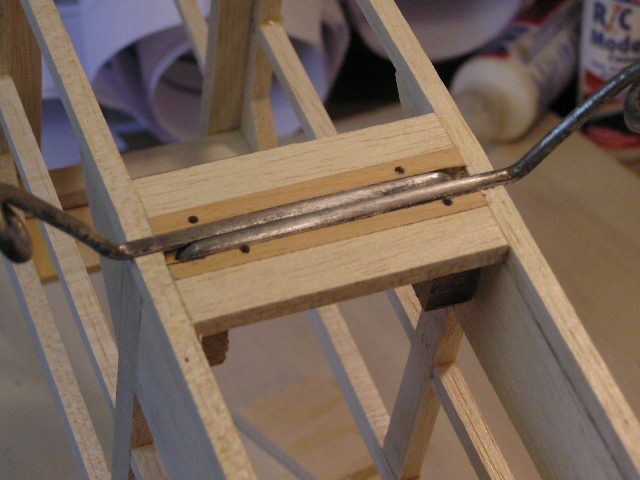
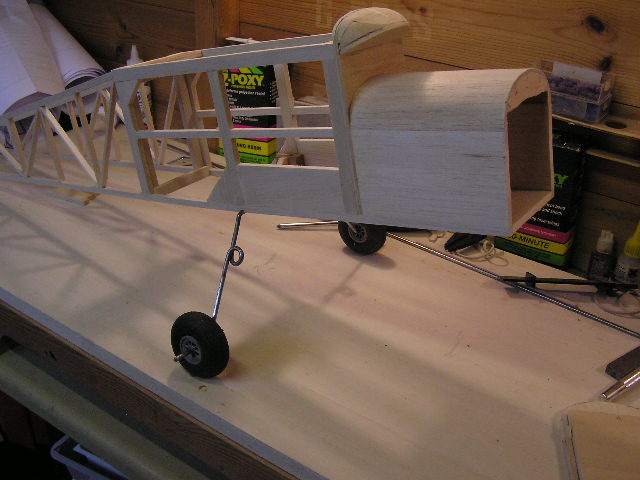
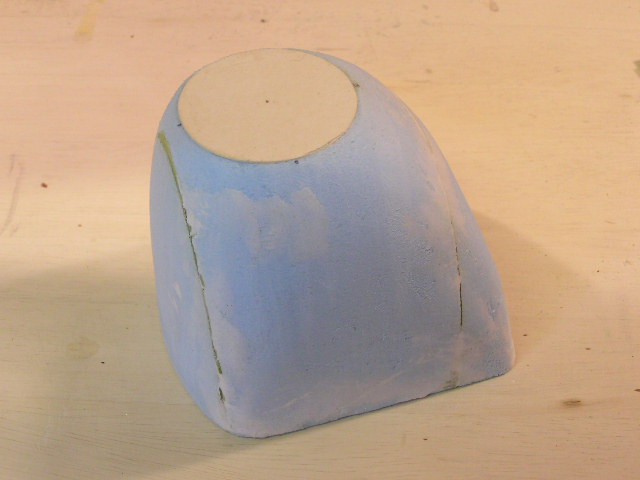
The wire bending for the undercart was a non-event. A mate donated some old U/C bits, I was able to modify a pair of U/C legs from an old V-Mar model, not elegant. but with a balsa fairing might look alright. Should the "spring loop" face forward or aft? To minimise the mess from making a foam cowling plug, I hacked the basic shape using an old carving knife. The plug isn't a success, I used far too much resin when I glued it together and the resin line between the blocks was very difficult to get evenly sanded to shape. It looks OK from about ten feet away, but would't stand close examination. The good bit with the sanding was I could do it outside the shed, not a breath of a breeze yesterday.
Please Log in or Create an account to join the conversation.
- MikeSeale
-
- New Member
-
Less
More
- Thank you received: 0
25 Apr 2020 07:35 #22258
by MikeSeale
Replied by MikeSeale on topic Back to Basics
Spring loop should go backwards...landing loads will then tighten the loop and it will spring back. It you leave it as is you will loosen the loop.
What 'resin' did you join your blocks with? I use aliphatic and it sands very easily. It also cuts with a hot wire.
To salvage your plug you could grind the resin line so it's deeper than the foam and fill with polyfilla or similar. This will sand about the same as the foam.
What 'resin' did you join your blocks with? I use aliphatic and it sands very easily. It also cuts with a hot wire.
To salvage your plug you could grind the resin line so it's deeper than the foam and fill with polyfilla or similar. This will sand about the same as the foam.
Please Log in or Create an account to join the conversation.
- Brian
-
Topic Author
- New Member
-
Less
More
- Thank you received: 0
25 Apr 2020 08:25 #22259
by Brian
Replied by Brian on topic Back to Basics
Thanks Mike, I used epoxy laminating resin, but I was too generous with it and the joints are far too thick. Good idea grinding out the resin and filling the gap. I sliced up the foam on my bandsaw, but its a bit limited for height, perhaps I'll brush the dust off the wire cutter, no height problem there, and I could cut the block to rough shape using card templates. Now I look at the U/C legs I should've realised that tightening the loop was the way to go. Funny how you forget things like that. Thanks for the nudge. Looks as though my old teacher was right when he wrote on my report (every year) " Must try harder".
Please Log in or Create an account to join the conversation.
- MikeSeale
-
- New Member
-
Less
More
- Thank you received: 0
25 Apr 2020 10:11 #22261
by MikeSeale
Even with a thin layer of epoxy it would show.
I don't know why 'we' join foam with epoxy. I remember kits from the '80's always instructed us to join the wings using 5-minute epoxy and wonder if this is where the idea came from. I only ever use pva or aliphatic for joining foam. Much cleaner and gives time to align properly. And it doesn't really matter if the joint is perfect, although will be better if there are no big gaps. If you've never tried it, join a couple of scraps of foam together using pva and leave alone for 24-hours. Then try to break them apart and I'll guarantee that it will be the foam breaking and not the joint.
Replied by MikeSeale on topic Back to Basics
Brian wrote: Thanks Mike, I used epoxy laminating resin, but I was too generous with it and the joints are far too thick.
Even with a thin layer of epoxy it would show.
I don't know why 'we' join foam with epoxy. I remember kits from the '80's always instructed us to join the wings using 5-minute epoxy and wonder if this is where the idea came from. I only ever use pva or aliphatic for joining foam. Much cleaner and gives time to align properly. And it doesn't really matter if the joint is perfect, although will be better if there are no big gaps. If you've never tried it, join a couple of scraps of foam together using pva and leave alone for 24-hours. Then try to break them apart and I'll guarantee that it will be the foam breaking and not the joint.
Please Log in or Create an account to join the conversation.
- Brian
-
Topic Author
- New Member
-
Less
More
- Thank you received: 0
25 Apr 2020 10:15 #22262
by Brian
Replied by Brian on topic Back to Basics
Never thought of using aliphatic glue, didn't think it would dry out as the foam isn't absorbent. I'll give it a try, better than hauling the wire cutter out and firing it up. Thanks Mike.
Please Log in or Create an account to join the conversation.
- Brian
-
Topic Author
- New Member
-
Less
More
- Thank you received: 0
28 Apr 2020 08:57 #22290
by Brian
Replied by Brian on topic Back to Basics
Cut some foam block and glued it with aliphatic glue. Left overnight, attempted to start shaping but the blocks fell apart. Think it was due to being cold overnight.
Experimented with the original resin bonded blocks. Gouged out the resin line and filled with Polyfilla one fill. Laminated a cowling using fibreglass tape and thinned Bostik PVA flooring adhesive. When dried, added three laminations of heavyweight model tissue (ex free flight power jobs) once again used the flooring PVA. Tried to speed things up by using heat gun, this looked good as some of the smaller wrinkles disappeared. Unfortunately got over enthusiastic and part of the foam core softened and collapsed. Good job there's no hurry. No photos, too embarrassing!
Experimented with the original resin bonded blocks. Gouged out the resin line and filled with Polyfilla one fill. Laminated a cowling using fibreglass tape and thinned Bostik PVA flooring adhesive. When dried, added three laminations of heavyweight model tissue (ex free flight power jobs) once again used the flooring PVA. Tried to speed things up by using heat gun, this looked good as some of the smaller wrinkles disappeared. Unfortunately got over enthusiastic and part of the foam core softened and collapsed. Good job there's no hurry. No photos, too embarrassing!
Please Log in or Create an account to join the conversation.
- MikeSeale
-
- New Member
-
Less
More
- Thank you received: 0
28 Apr 2020 09:21 #22291
by MikeSeale
An alternative if you really cannot get PVA to work is UHU POR. I use exactly the same technique for spreading this contact adhesive. Once spread you just separate the blocks and leave for about 5 minutes before pressing back together again. POR is also hot-wire cutable.
Replied by MikeSeale on topic Back to Basics
I don't think that temperature would have that big an effect...we're not talking about the difference between tropical and arctic weather. How much glue are you using? You want to use as little as possible. I put glue on one of the blocks and press the two blocks together . Then slide them in order to spread the glue. Separate the blocks and look to see that the glue has been spread everywhere. Add a little more glue to dry spots and spread it some more using the blocks. At this stage the blocks are already very difficult to pull apart. And if it is easy to slide the blocks then you have too much glue.Brian wrote: Cut some foam block and glued it with aliphatic glue. Left overnight, attempted to start shaping but the blocks fell apart. Think it was due to being cold overnight.
An alternative if you really cannot get PVA to work is UHU POR. I use exactly the same technique for spreading this contact adhesive. Once spread you just separate the blocks and leave for about 5 minutes before pressing back together again. POR is also hot-wire cutable.
Please Log in or Create an account to join the conversation.
- Brian
-
Topic Author
- New Member
-
Less
More
- Thank you received: 0
28 Apr 2020 09:55 - 28 Apr 2020 09:59 #22292
by Brian
Replied by Brian on topic Back to Basics
I put some glue on one surface and spread it thinly, applied the second block and "wrung" the blocks to get a good grip. Left overnight with a weight on top. The early morning temperature showed as just over nine degrees C. The blocks were bonded to a distance of about 10mm in from the outside edges. I think perhaps a full 24 hour cure is needed. Anyway, its all good fun and possibly informative. I'm using a very dense flooring quality blue foam, I wonder if a more open textured foam would get a quicker bond?
Last edit: 28 Apr 2020 09:59 by Brian.
Please Log in or Create an account to join the conversation.
- MikeSeale
-
- New Member
-
Less
More
- Thank you received: 0
28 Apr 2020 10:50 #22293
by MikeSeale
Overnight is definitely not 24 hours.
The foam I use is exactly the same as yours.
Replied by MikeSeale on topic Back to Basics
Brian wrote: I'm using a very dense flooring quality blue foam, I wonder if a more open textured foam would get a quicker bond?
Overnight is definitely not 24 hours.
The foam I use is exactly the same as yours.
Please Log in or Create an account to join the conversation.
Moderators: DaveBright
Time to create page: 0.379 seconds
©
2009 - 2026
WMAC PCF Design